Integrated report 2020


We uphold our licence to operate through
Cradle-to-grave management of waste is critical to maintain our licence to operate. We developed a group environmental policy and waste management standard for hazardous and non-hazardous waste. Our waste management standard enforces a waste management hierarchy that promotes prevention, minimisation, reuse, recycling and energy recovery while ensuring safe waste disposal in line with the National Environmental Management: Waste Act, 2008 (Act 59 of 2008) and supporting legislation. The environmental policy introduced initiatives such as waste prevention, reuse, recycling, energy recovery and safe waste disposal to reduce environmental and health risks with sustainability in mind. Exxaro's BUs receive a rebate to be provided for recycling waste such as paper, used oil and scrap metals.
Our BUs capture hazardous waste volumes monthly including contaminated soil, medical waste, used PPE and sewage. If a BU produces more than 20kg of hazardous waste daily, it is registered with the South African Waste Information System and must comply with its registration certificate.
KPIs, aligned with the FTSE Russell sustainability and ESG indices, drive continuous improvements.
Exxaro's operations do not have on-site waste treatment processes. Contractors clean oil and hydrocarbon spills, and remove the waste to hazardous landfills. Medical professionals manage waste produced by our Matla and Grootegeluk on-site clinics.
We also participate in waste management initiatives of the Department of Environment, Forestry and Fisheries, Business Unity South Africa and the Minerals Council.
Exxaro collaborates with government, research institutes and industrial partners to monitor technological developments of waste stream conversions that address climate change and job creation.
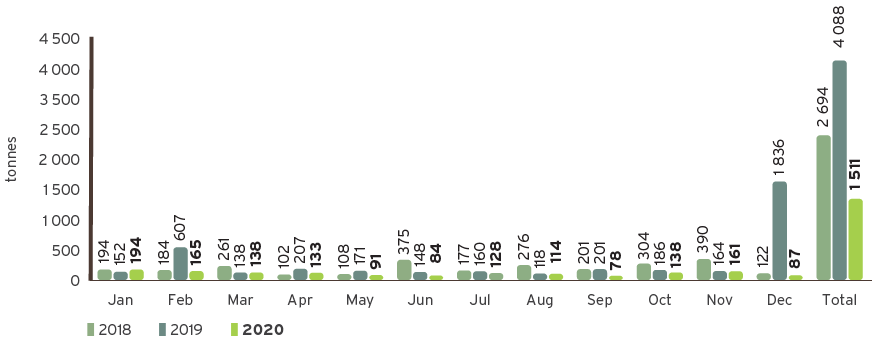
 The total weight of hazardous waste generated at our managed coal operations in 2020 decreased by 63% to 1 511t (2019: 4 088t) due to recycling initiatives and inactivity induced by COVID-19.
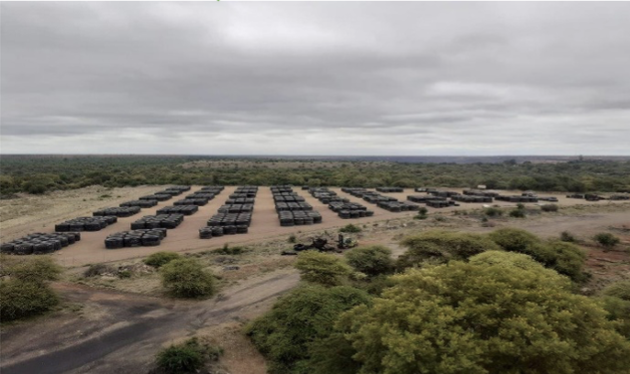
Expected to double in size within two years as the Grootegeluk complex expands, the waste tyre storage facility was built in response to a notice of non-compliance with regulations in 2016.
After the appointment of a waste tyre reprocessing contractor, the following benefits were realised:
The project is a first for the local mining industry with the potential for Exxaro to lead peers in sustainable environmental liability management on an operating mine. It will be rolled out at Exxaro's other BUs across South Africa over time.