Integrated report 2020


Our material matters guide our integrated reporting process, which is driven in turn by strategic and integrated thinking that enables sustainable value creation and preservation. These matters help us manage our risks and opportunities, and guide our commitment to our stakeholders. We determine these material matters through a detailed materiality determination process.
The purpose of our materiality determination process is to give our stakeholders insight into the matters that may affect our ability to create and preserve value over time.
Assess against
global reporting
context
Material matters for reporting purposes
Prioritising of identified matters by executives and those charged with governance
Internal interviews and interviews with board members
Review of internal documentation including risk register
Critical assessment of stakeholder reports
Analysis of external sources such as media reports and articles
Review of material matters included in the integrated and annual reports issued by peers
1
Critical assessment of stakeholder reports
2
Analysis of external sources such as media reports and articles
3
Review of material matters included in the integrated and annual reports issued by peers
4
Review of internal documentation including risk register
5
Internal interviews and interviews with board members
6
Prioritising of identified matters by executives and those charged with governance
7
Material issues for reporting purposes
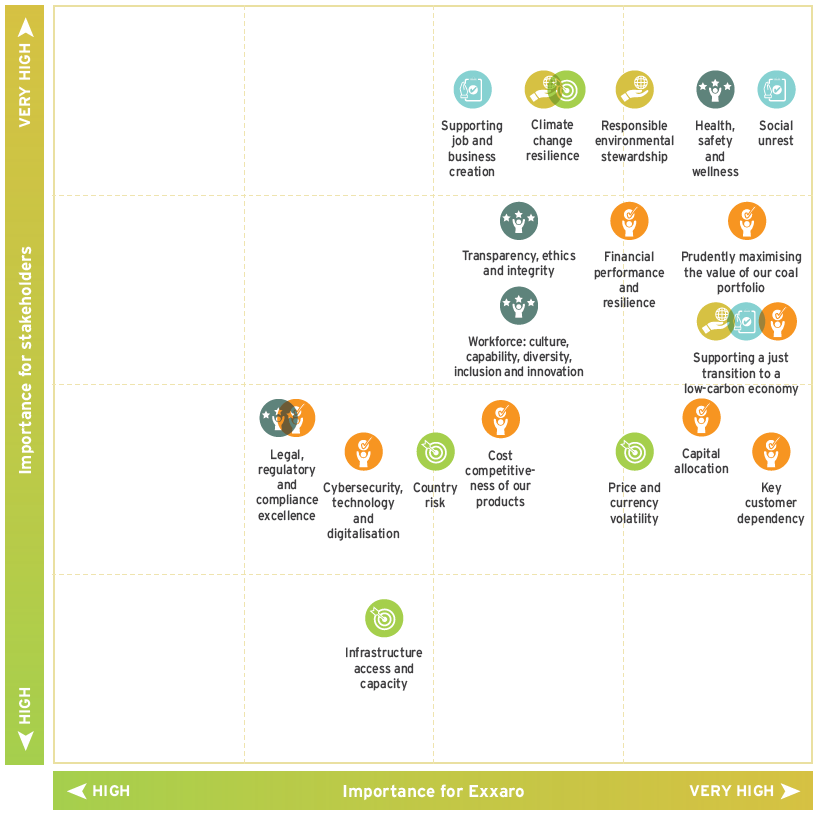
Our materiality determination process identified 18 material matters. These are shown in the matrix that follows, reflecting their importance for Exxaro and our stakeholders. The identified material matters are mapped into five broad themes:
| Theme | Material matters | |
Macro-environment
The context in which we operate considering these material matters. |
|
|
|---|---|---|
Business resilience
The business's ability to respond to key macro-issues and success in achieving its objectives. |
|
|
Our people
We refer to the organisation's internal stakeholders and our external stakeholders in our supply and value chains. |
|
|
Social licence to operate
We operate in an environment of stakeholder capitalisations and where our business activities impact our stakeholders who respond to these impacts. This interaction provides for a social licence to operate beyond regulatory licences and permits. |
|
|
Climate change
Climate change is no longer a refutable event. We are committed to the Pan Agreement and established business objectives to respond to the risks and opportunities presented by climate change. |
|
 Macro-environment
 Business resilience
 Our people
 Social licence to operate
 Climate change
Since 2019, our material matters have broadened in scope and significance, not surprising given the broader macro-trends such as COVID-19, global instability and climate change. Each material matter is explained below and aligns with our strategy (during 2020), business model and selected SDGs.
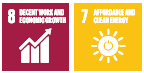
Price volatility refers to fluctuations in the price of our export and some domestic coal products. Currency volatility refers to fluctuations in the exchange rate for exports. As a price taker with product prices denominated in United States (US) dollar, we are exposed to changes in the US dollar to South African rand exchange rate and shifts in coal and iron ore prices (two major contributors to earnings).
Larger macro-economic factors impact price and currency volatility. We have no control over these, which could significantly impact our business. We implement several plans to manage these challenges in our approved risk appetite (limited price hedging) and remain cognisant of the potential impact. Additionally, our revenue is diversified by Eskom's fixed contracts with annual price escalation, providing a degree of stability.
| Material theme | 2020 strategic objectives* | Related risks | Related SDGs |
|
Macro-environment  |
|
|
 |
Related capitals |
| Affected stakeholders |
| Customers, investors (returns on investment), employees (employment security) communities and government (taxes and employment) |
| Key stakeholder engagements |
Exxaro engages continuously with customers and the market on coal pricing.
|
| Refer to the macro-environment section in the integrated report for more information. |
Country risk refers to the inherent risk of conducting business in a country.
We are exposed primarily to risks relating to South Africa - our home base. These risks include high levels of unemployment, downgrades by credit rating agencies, dampened economic growth and lagging policy reform. Country risk remains a critical risk area for us to monitor as deterioration may affect the ease of doing business, operational returns and the attractiveness of South Africa as an investment destination. We continue monitoring these risks and implement appropriate strategies, where possible, to ensure we can create value for our stakeholders and deliver on our purpose.
| Material theme | 2020 strategic objectives | Related risks | Related SDGs |
|
Macro-environment |
|
|
 |
Related capitals |
| Affected stakeholders |
| Customers, suppliers, government, communities, employees, contractors, and investors and analysts |
Key stakeholder engagements All stakeholders could be affected to varying degrees by a deteriorating operating environment. Ongoing engagements with stakeholders on Exxaro's response to this risk. |
| Refer to macro-environment section in the integrated report for more information. |
| * | All material matters correlate to our 2020 strategy, but have also informed our new Strategic Growth and Impact strategy. See Our strategy on the integrated report for more information on our strategic evolution |
Our operational sustainability is tied to the success of Eskom, the national power utility and ArcelorMittal SA Limited (Arcelor Mittal).
We continue collaborating with our customers to ensure mutual success while looking to broaden our customer base.
| Material theme | 2020 strategic objectives | Related risks | Related SDGs |
|
Business resilience |
|
|
 |
| Related capitals |
|
Affected stakeholders Customers, and investors and analysts |
|
Key stakeholder engagements
|
| Refer to the business resilience section in the integrated report for more information. |
Infrastructure access and capacity relate to ports, railways, mines and power stations.
Outdated, inefficient or poorly functioning infrastructure, as well as a lack of access to infrastructure, can adversely impact our operations' effectiveness and our ability to service our customers and other stakeholders.
| Material theme | 2020 strategic objectives | Related risks | Related SDGs |
|
Macro-environment |
|
|
 |
Related capitals |
|
Affected stakeholders Customers, suppliers, government, investors and analysts |
|
Key stakeholder engagements Engagements with Transnet Freight Rail take place regularly and at various levels in order to discuss matters of both operational and strategic consequence. Exxaro experienced challenges with the availability of trains. |
| Refer to the macro-environment section in the integrated report for more information. |
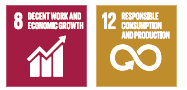
Our coal portfolio is a valuable natural resource entrusted to us, and must be selectively and responsibly extracted to ensure we optimise its value, support economic growth and social development while safeguarding the natural environment, managing reputational risks and preparing for the low-carbon future.
Our just transition to a low-carbon future has a foothold on the early value coal strategy, a key pillar of our Sustainable Growth and Impact strategy.
| Material theme | 2020 strategic objectives | Related risks | Related SDGs |
|
Business resilience |
|
|
 |
Related capitals |
| Affected stakeholders |
| Customers, suppliers, government, communities, employees, contractors, unions, non-governmental organisations (NGOs), and investors and analysts |
| Key stakeholder engagements |
|
| Refer to the business resilience section in the integrated report for more information. |
Exxaro is committed to alleviating potential social and relationship and human capital disruption that could lead to further unemployment and poverty.
We consider the social impact on employees and communities who depend on the coal economy and respond by preparing affected people through appropriate skills and social support structures, for example alternative economic activities.
| Material theme | 2020 strategic objectives | Related risks | Related SDGs |
|
Business resilience |
|
|
 |
| Related capitals |
|
Affected stakeholders Customers, suppliers, government, communities, employees, contractors, unions, NGOs, and investors and analysts |
|
Key stakeholder engagements
|
| Refer to the business resilience in the integrated report for more information. |
Over time, our financial performance and resilience directly influence our business's sustainability, success and viability.
Without delivering solid returns to shareholders over time and ensuring we have the financial resources to implement our growth plans and social development objectives, we cannot deliver value to our broader stakeholders.
| Material theme | 2020 strategic objectives | Related risks | Related SDGs |
|
Business resilience |
|
|
 |
| Related capitals |
Affected stakeholders Investors and analysts, customers, suppliers, government, communities, employees and contractors |
|
Key stakeholder engagements We have adopted agility in our day-to-day business operations, by implementing new ways of work, that allowed us to capture opportunities that presented themselves during the pandemic. Our newly implemented short-cycle value chain control, which is part of our new ways of work and response to the challenges brought by the pandemic, helped in ensuring product placement across various markets, even during global lockdown.
|
| Refer to the business resilience in the integrated report for more information. |
Cost competitiveness is our ability to sustainably produce quality coal products at the lowest marginal and average total cost, both in the short and long term. We strive to ensure our coal operations are best-in-class and cost competitive through our operational excellence drive, including adopting relevant technology and innovation, as we continue meeting customer expectations in terms of volumes, quality and price. Being cost competitive in an environment of price volatility is a key tenant of our operational excellence strategy.
| Material theme | 2020 strategic objectives | Related risks | Related SDGs |
|
Business resilience |
|
|
 |
Related capitals |
| Affected stakeholders Customers, suppliers, employees, contractors, and investors and analysts |
|
| Refer to the business resilience in the integrated report for more information. |
Capital allocation refers to how we invest and distribute our financial resources to support our strategy, increase efficiency, expand operations and maximise value. We carefully consider how we allocate capital to achieve our strategic goals and invest in our current operations and future growth plans.
| Material theme | 2020 strategic objectives | Related risks | Related SDGs |
|
Business resilience |
|
|
|
Related capitals |
| Affected stakeholders Investors and analysts, and debt funders |
| Key stakeholder engagements |
|
| Refer to the business resilience in the integrated report for more information. |
Legal, regulatory and compliance excellence is our awareness and understanding of, and compliance with relevant industry and company laws, policies and regulations
For Exxaro, this means actively monitoring the regulatory environment to identify any changes in compliance requirements and adapting to compliance efforts accordingly, maintaining our licence to operate and going beyond compliance. This includes, among others, codes of good practice, industry charters and other regulations, and best practice such as the UN SDGs and NDP.
| Material theme | 2020 strategic objectives | Related risks | Related SDGs |
|
Business resilience Our people

|
|
|
 |
Related capitals |
| Affected stakeholders Government, employees, contractors, and investors and analysts |
|
| Refer to the business resilience and our people sections in the integrated report for more information. |
Creating and preserving value for our stakeholders is guided by our values and requires effective and efficient governance processes and practices informed by good corporate citizenship pillars, namely transparency, accountability and integrity.
We continuously aim to be a responsible and ethical corporate citizen. Our approach to transparency, ethics and integrity encompasses among others, fraud prevention, anti-bribery and anti-corruption. In addition, we face intense scrutiny by consumers and activists demanding greater visibility and transparency regarding our carbon footprint and emissions reduction strategies, environmental stewardship and achieving social objectives.
| Material theme | 2020 strategic objectives | Related risks | Related SDGs |
|
Our people |
|
|
 |
Related capitals |
| Affected stakeholders Customers, suppliers, employees and contractors |
|
| Refer to the our people section in the integrated report for more information. |
Environmental stewardship refers to responsibly using the natural resources we rely on.
It highlights the custodial role we play in terms of how we use, manage and protect the natural environment while delivering on our strategic objectives and ensuring we create value for our stakeholders and the country at large. Key stewardship efforts relate to water, air quality and carbon emission reduction.
| Material theme | 2020 strategic objectives | Related risks | Related SDGs |
|
Climate change Social licence to operate  |
|
|
 |
Related capitals |
| Affected stakeholders Communities, customers, suppliers, government, employees, contractors, NGOs, and investors and analysts |
|
|
Refer to the social licence to operate and our environment sections in the integrated report for more information. |
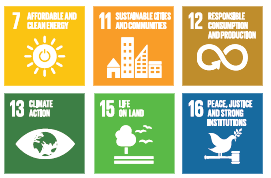
Climate change resilience refers to our ability to adapt and succeed in the face of direct and indirect climate change impacts. In addition to addressing and managing these risks, it encompasses our ability to capitalise on the strategic opportunities presented by the shift to a lower-carbon and resource-constrained economy.
Guided by our purpose, our Sustainable Growth and Impact strategy is designed to ensure we are able to manage the direct and indirect climate change impacts on our current portfolio while ensuring we are able to contribute to the low-carbon environment of the future.
| Material theme | 2020 strategic objectives | Related risks | Related SDGs |
|
Macro-environment Climate change  |
|
|
|
Related capitals |
| Affected stakeholders Customers, suppliers, government, communities, employees, contractors, and investors and analysts |
|
| Refer to the macro-environmentand our environment sections in the integrated report for more information.
Detailed disclosure is available in our CCRS report |
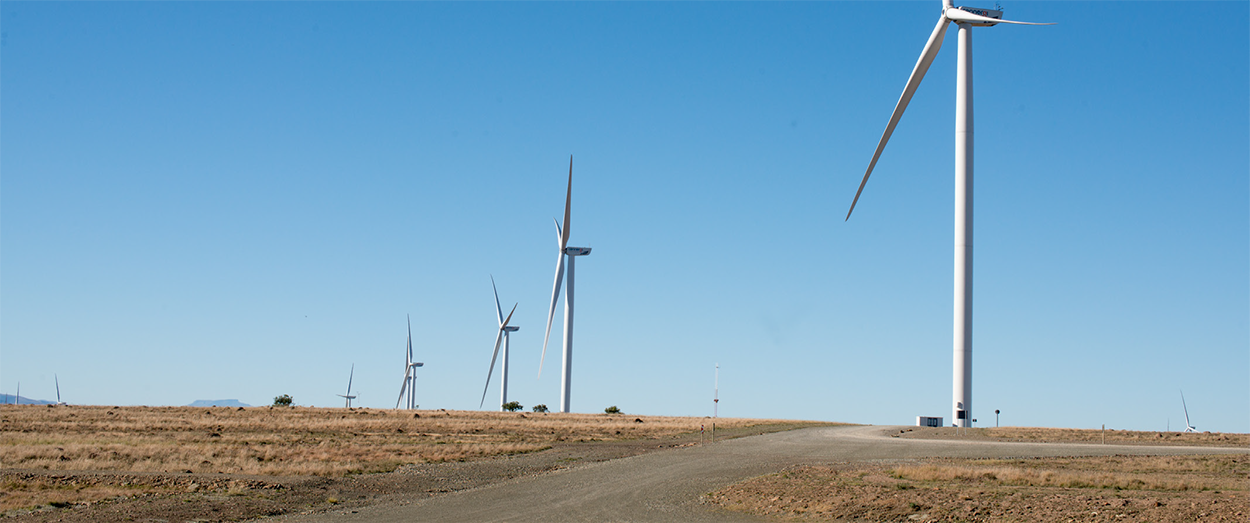
Cennergi’s Amakhala Emoyeni windfarm
Our corporate culture is critical in determining our success today and in years to come. We aim to foster a culture that supports adaptability and innovation, leveraging the strength of diversity to enable our success.
We are committed to ensuring we have the right capabilities and values to deliver on our strategy and lead the business into the future to achieve our vision and fulfil our purpose.
| Material theme | 2020 strategic objectives | Related risks | Related SDGs |
|
Our people |
|
|
 |
Related capitals |
| Affected stakeholders Customers, suppliers, employees and contractors |
|
| Refer to the our people in the integrated report for more information. |
Our employees are the organisation's lifeblood. Exxaro is committed to protecting their health, safety and wellness. We strive to achieve zero harm through collective responsibility, commitment and risk awareness.
Our targeted health, safety and wellness strategies and programmes are in place to help us achieve this. Throughout the COVID-19 pandemic, we continuously leveraged and enhanced our existing health and wellness programmes to protect our employees, contractors and communities.
| Material theme | Strategic objectives | Related risks | Related SDGs |
|
Our people |
|
|
 |
Related capitals |
| Affected stakeholders Employees, contractors, communities and unions |
|
| Refer to the our people in the integrated report for more information. |
Technology is rapidly changing and evolving, impacting organisations around the world though its unprecedented risks and opportunities. To navigate this, Exxaro's resilience and agility will be enabled by leveraging digital tools, as well as progressive methodologies and capabilities that enable us to enhance performance across the value chain.
We continue investing in technology and digitalisation, taking an enterprise-wide approach rather than a point solution. While the business advances its transformation, and relies increasingly on technology, we remain cognisant of managing the risks associated with technology and digitalisation as we strive to secure Exxaro's assets across all information security domains.
| Material theme | 2020 strategic objectives | Related risks | Related SDGs |
|
Business resilience |
|
|
|
Related capitals |
| Affected stakeholders Customers, suppliers, communities, employees, contractors, and investors and analysts |
|
Key stakeholder engagements |
| Refer to the business resilience section in the integrated report for more information. |
In our mining communities, our operations are the primary economic activity (other than Eskom) where there is limited economic diversification independent of mining. With few job opportunities elsewhere, due to low economic growth and high levels of unemployment, the local communities require employment and procurement opportunities (please see material matter below as well). Furthermore, there is increasing pressure on private organisations to provide services traditionally supplied by the state. These pressures can result in social unrest affecting our communities, employees and operations.
We believe that Exxaro is a tenant in our host communities. A successful relationship with communities is key to our business success and growth. In addition to our SLPs, we invest in areas such as environmental conservation and health and welfare through our corporate social investment (CSI) programmes. Exxaro will continue addressing these issues of concern through current and future "impact at scale" initiatives to reach a long-term resolution on future opportunities to benefit communities.
| Material theme | 2020 strategic objectives | Related risks | Related SDGs |
|
Macro-environment Social licence to operate
|
|
|
 |
Related capitals |
| Affected stakeholders Government, communities, employees, contractors and unions |
|
| Refer to the macro-environment and social licence to operate sections in the integrated report for more information. |
Given the high levels of unemployment and poverty in South Africa, particularly among the youth and women, Exxaro is committed to supporting job and business creation by investing in community upliftment and youth development. We focus on investments beyond mere CSI to create solutions that leave a legacy for our communities. We aim to empower, upskill and develop South Africans from a young age to ensure a sustainable future for generations to come.
| Material theme | 2020 strategic objectives | Related risks | Related SDGs |
|
Social licence to operate |
|
|
 |
| Related capitals |
| Affected stakeholders Suppliers, government, communities, employees, contractors and unions |
|
Key stakeholder engagements
|
| Refer to the social licence section in the integrated report for more information. |


